MV Globex Logo
TRACING ORIGINS
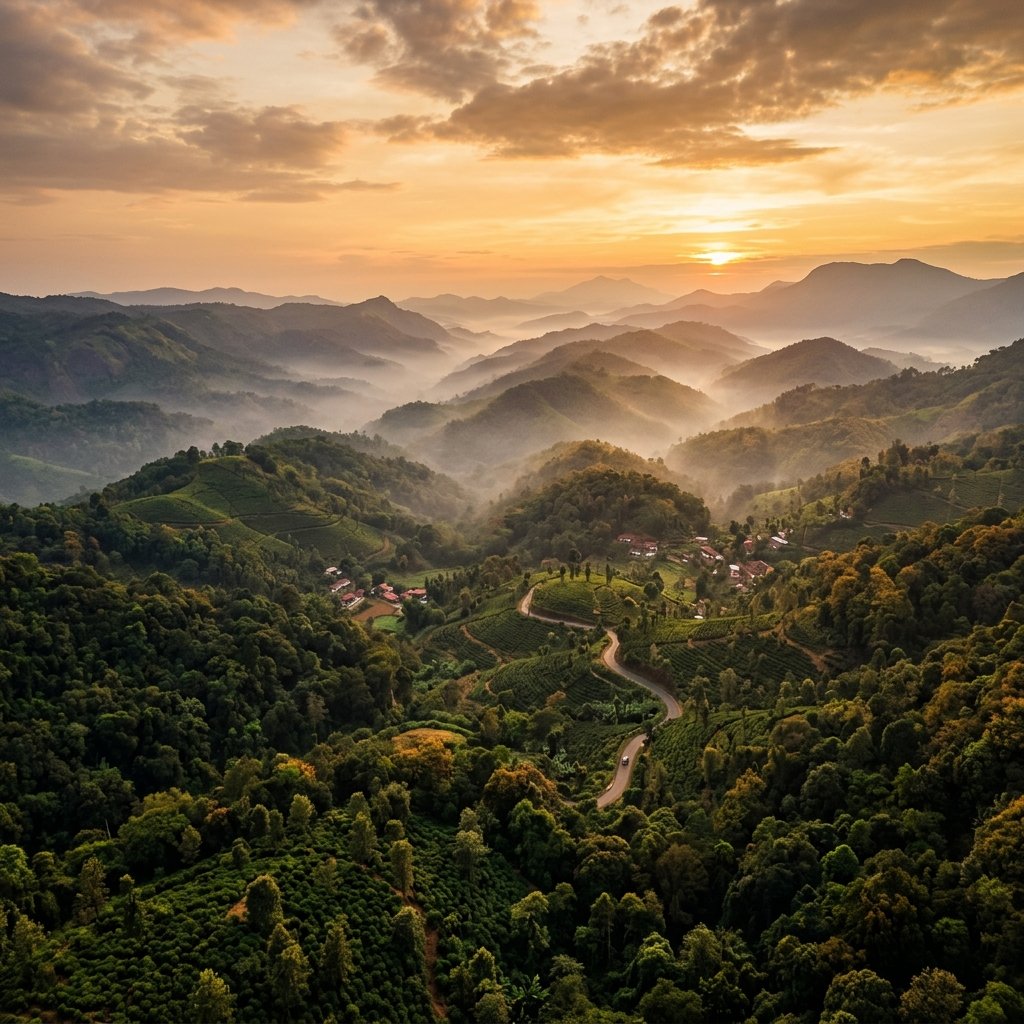
Panoramic aerial view of Karnataka Western Ghats coffee belt at golden hour
Karnataka · South India · Western Ghats

Where India's Finest Coffee Finds the World.

Every lot MV Globex exports begins here — in the shade-grown estates of Karnataka's Western Ghats, one of Earth's 36 biodiversity hotspots, where altitude, monsoon, and volcanic soil create coffees unlike anywhere else on the planet.

900–1,200m Coorg
1,000–1,500m Chikmagalur
800–1,100m Sakleshpur
700–1,000m Mysuru

India's Most
Celebrated
Growing Region

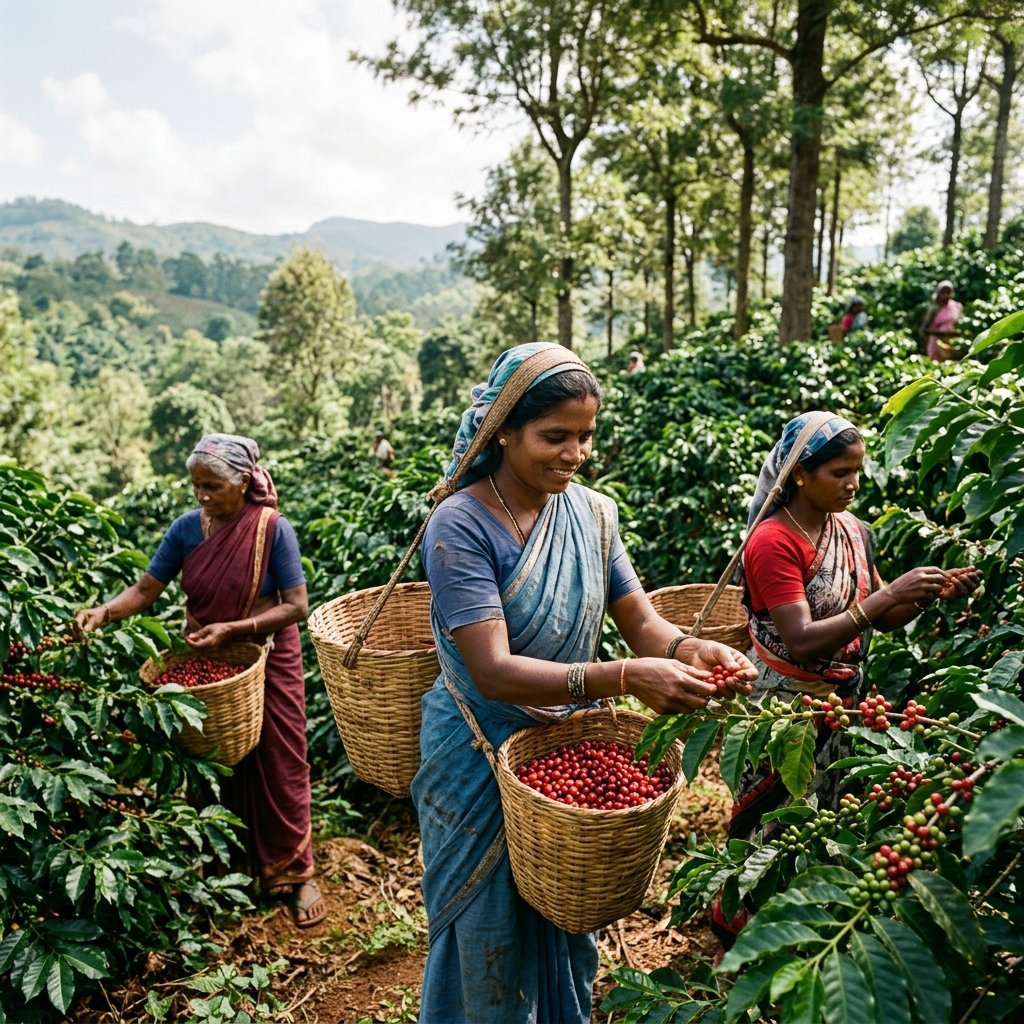
Karnataka produces over 70% of India's total coffee output — and within Karnataka, it is the shaded hill districts of Coorg, Chikmagalur, Hassan, and Mysuru that define the nation's specialty coffee character. These are not monoculture farms. They are ecosystems — where coffee grows beneath a living canopy of silver oak, jackfruit, pepper vines, and cardamom, sharing soil with leopards, hornbills, and one of the last intact tiger corridors in South Asia.

The result is a cup profile that is distinctly Indian: full-bodied, clean, with a characteristic low acidity, and flavour notes that range from dark chocolate and spice in the washed Arabicas of Coorg, to wild berry and dried fruit in the natural-processed lots of Chikmagalur. Karnataka coffee is not trying to be Ethiopia or Colombia — it is something entirely its own.

MV Globex works exclusively within this belt, sourcing directly from estate owners and smallholder families who have tended these lands for generations. We do not buy from auctions or aggregators. Every lot we export has a name, a GPS coordinate, a harvest date, and a story.

0%
of India's coffee from Karnataka
0+
Partner estates & farms
0
Distinct growing districts
0
Biodiversity hotspot rank globally
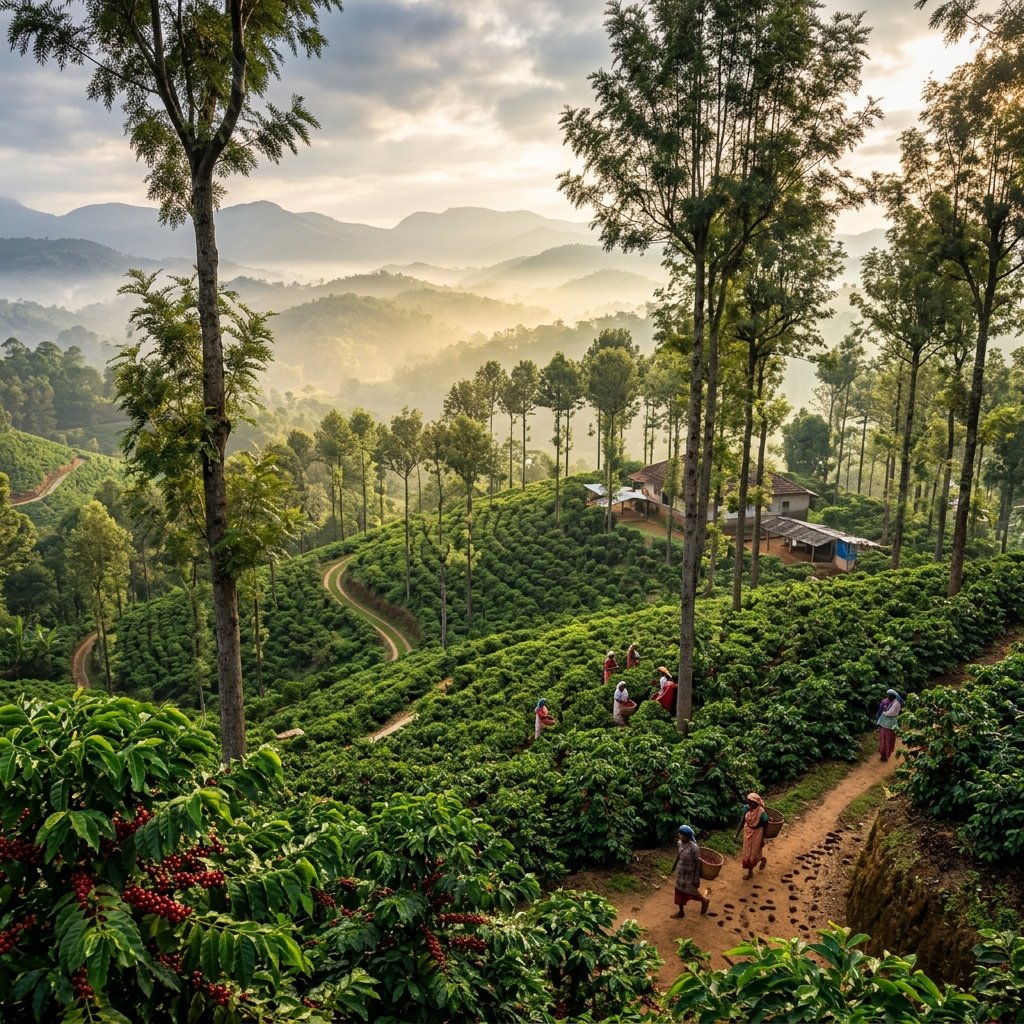
Coorg Kodagu coffee estate with mist-covered Western Ghats hills
01 Coorg

Coorg
(Kodagu)

🏔 900–1,200m altitude 🌿 Arabica dominant ☁️ 2,500mm annual rainfall

Coorg — officially Kodagu — is India's coffee capital, producing the largest volume of export-grade Arabica in the country. Nestled in the southern Western Ghats at altitudes between 900 and 1,200 metres, the district receives over 2,500mm of annual rainfall from both the southwest and northeast monsoons, creating ideal growing conditions without the need for irrigation.

The coffee here is overwhelmingly shade-grown, with silver oak, jackfruit, and native forest trees forming a canopy that regulates temperature, maintains soil moisture, and supports extraordinary biodiversity. This agroforestry model — practised by Coorg's Kodava farming families for over 200 years — produces Arabica with a characteristic cup profile: full body, low acidity, dark chocolate base notes, and a clean, spiced finish that makes it a prized component in Italian and Middle Eastern espresso blends.

MV Globex sources both washed and pulped-natural (honey) lots from Coorg, working with 140+ estates ranging from family-owned 10-hectare smallholdings to large integrated estates with their own wet mills. Our flagship Kodagu Washed Arabica consistently scores 85–87 on the SCA scale, making it one of the most commercially versatile Indian origins in the specialty export market.
Dark Chocolate Orange Peel Caramel Mild Spice Clean Finish

Chikmagalur

🏔 1,000–1,500m altitude 🌿 Arabica & Robusta 🌧 3,000mm annual rainfall

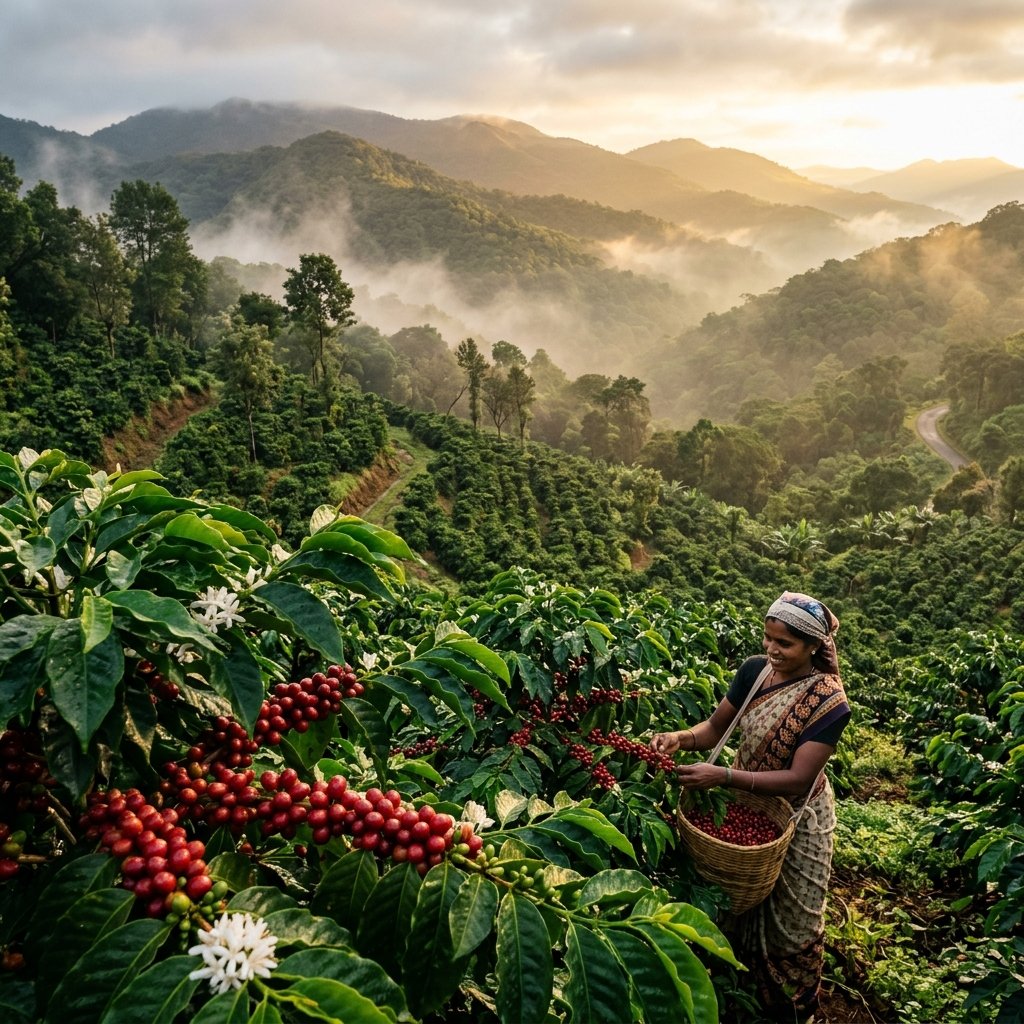
Chikmagalur holds a unique place in coffee history: it is where coffee cultivation in India began. In the 17th century, Sufi saint Hazrat Shah Jamali Baba — known as Bababudan — smuggled seven coffee seeds from Yemen and planted them in the Baba Budangiri hills. Those seven plants gave birth to an industry that today produces over 400,000 metric tons annually across India.

The district's higher altitudes — with farms reaching 1,500 metres on the Baba Budangiri range — produce Arabica with noticeably more brightness and complexity than the lowland Coorg lots. The high rainfall and cooler temperatures slow cherry maturation, concentrating sugars and creating more layered flavour development. Natural and honey-processed lots from Chikmagalur are increasingly sought by European and Scandinavian specialty roasters for their fruit-forward, unconventional character.

Our Bababudangiris Natural is sourced from a cluster of estates on the northern slopes of the range. Extended dry-processing on raised beds brings out wild berry, honey, and dried fig notes that are genuinely rare in the Indian coffee context — and position this lot as a compelling single-origin for adventurous specialty menus.

Wild Berry Honey Dried Fig Floral Stone Fruit
Chikmagalur coffee plantation on Baba Budangiri hills in Karnataka
02 Chikmagalur
Hassan Sakleshpur coffee harvest in Karnataka Western Ghats
03 Hassan

Hassan &
Sakleshpur

🏔 800–1,100m altitude 🌿 Arabica specialty lots 🌧 2,800mm annual rainfall

Sakleshpur, a hill station within Hassan district, is Karnataka's most exciting emerging specialty origin. The steep, heavily forested slopes receive some of the Western Ghats' most intense monsoon rainfall — over 2,800mm annually — and the combination of rapid elevation changes, rich laterite soil, and year-round mist creates an environment that produces Arabica with a distinct stone-fruit brightness unusual for Indian coffee.

The area's farms are predominantly medium-sized family estates where honey and washed processing methods have been refined over recent years in response to growing specialty demand. The Sakleshpur Honey Process — with its retained mucilage and extended drying — delivers a silky body with peach, brown sugar, and toffee notes that have made it a standout among Nordic specialty buyers looking for an Indian origin that challenges preconceptions.

MV Globex has been active in Sakleshpur since 2014, supporting farmers with raised-bed drying infrastructure and pre-harvest financing. The long-term commitment has given us access to lots that rarely reach the open market — micro-batches of exceptional quality that we reserve for our direct trade specialty clients worldwide.

Peach Brown Sugar Toffee Silky Body Stone Fruit

Mysuru
District

🏔 700–1,000m altitude 🌿 Robusta AA grade ☕ Espresso blend essential

Mysuru district produces Karnataka's most commercially significant Robusta — a variety often overlooked by specialty buyers but essential to the world's espresso blending industry. Estate-grown Robusta AA from the shaded coffee belts around Mysuru has a different character entirely from the sun-grown commodity Robusta that dominates global markets.

Grown under the same silver oak agroforestry canopy as the district's Arabica, Mysuru Robusta develops a deep, complex cup: dark cocoa, tobacco, earthy oak, and exceptional crema-producing capacity. Italian roasters — who consume the majority of MV Globex's Mysuru output — prize it for the consistency and structural strength it brings to their signature espresso blends, season after season.

The estate-grade Robusta AA designation — selecting only the largest, most uniform beans — ensures a clean, defect-free green that cups reliably above 80 SCA points, making it the highest-scoring Indian Robusta in our catalogue and one of the most sought-after in the category globally.

Dark Cocoa Tobacco Earthy Oak Rich Crema Low Acidity
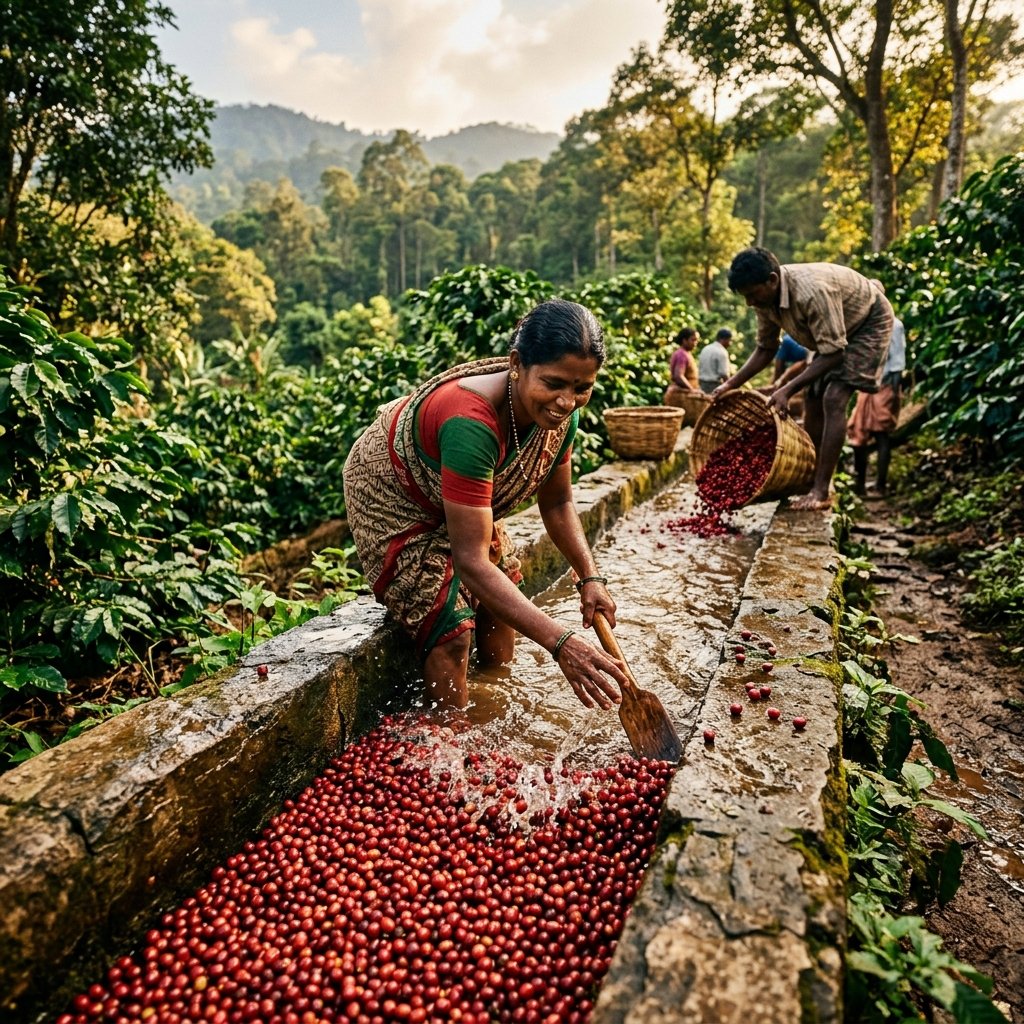
Karnataka coffee wet processing with freshly harvested red cherries in water
04 Mysuru
What Makes Karnataka Different

The Science of Terroir

Karnataka's exceptional cup quality is not accidental. It is the product of four intersecting environmental forces that combine in the Western Ghats in a way found almost nowhere else on earth.

Dual Monsoon

Karnataka's coffee belt receives rainfall from both the southwest monsoon (June–September) and the northeast monsoon (October–December), delivering 2,500–3,000mm annually and creating ideal cherry development conditions without supplemental irrigation.

Volcanic Laterite Soil

The Western Ghats' ancient volcanic laterite soils are rich in iron, aluminium, and trace minerals that impart the characteristic earthy-spice base notes found in Karnataka Arabica. Excellent drainage prevents waterlogging while retaining enough moisture for sustained cherry development.

Altitude Temperature Swing

Daytime temperatures of 22–28°C drop sharply at night across the Ghats, creating a diurnal range that slows cherry maturation and forces the plant to build complex sugar and acid concentrations. The result is a denser bean with more extractable flavour compounds per gram.

Agroforestry Canopy

Silver oak, jackfruit, pepper, and cardamom form a living shade canopy over Karnataka's coffee estates. This multi-storey agroforestry system regulates temperature, fixes nitrogen, suppresses weeds naturally, and supports a biomass-rich soil ecosystem that dramatically reduces the need for synthetic inputs.

Karnataka Western Ghats coffee landscape

Taste Karnataka Coffee
for Yourself

We dispatch cupping samples within 72 hours to roasters, importers, and buyers worldwide. Tell us which district interests you — we'll send the right lot, with its full traceability record, so you can cup it alongside your current programme and taste the difference Karnataka makes.